
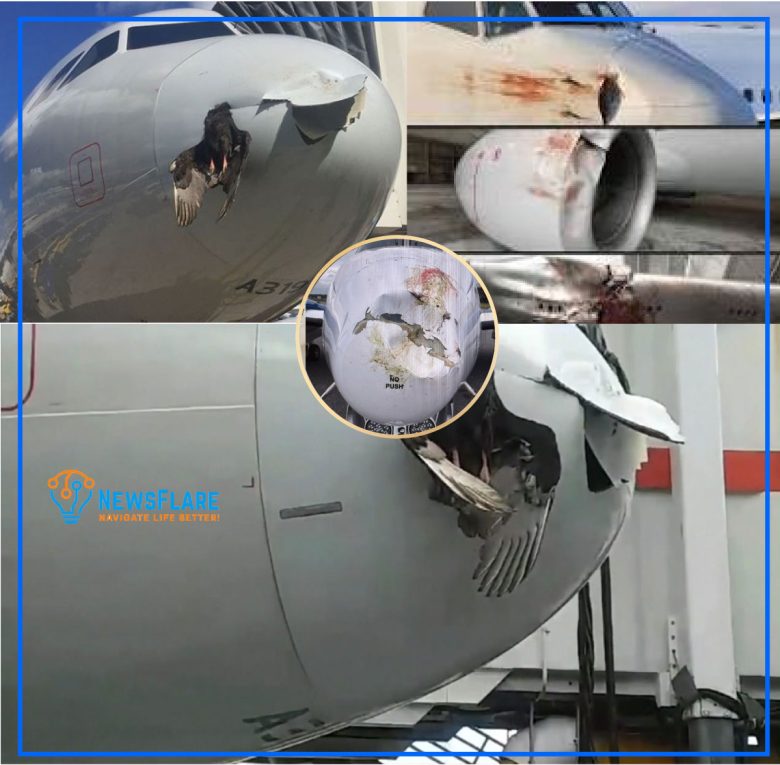
Picture this: you’re soaring into the sky, cruising toward your destination, when suddenly a feathered kamikaze comes crashing into your turbine. That’s exactly what happened to Flight 1722 from LaGuardia Airport (LGA) in New York – when a bird blasted straight into the engine of an Airbus A321, triggering chaos, a fireball, and a dramatic emergency landing at John F. Kennedy International Airport (JFK).
It went down Thursday evening when the plane took off from LaGuardia at just past 7 p.m., bound for Charlotte, North Carolina. Barely airborne, the bird struck the right engine’s fan. Boom – loud bang, obvious engine damage and immediate “mayday” vibes. The clip shows the bird hurtling right into the spinning blades, with a sickening slap, followed by a flash.
Passengers sat stunned. The engine caught fire, the plane tilted, the cabin shook. One woman told reporters, “I thought I was gonna die.” Another bloke saw “two flames in the sky.” Whatever it was, it was a scene. But props to the crew: with the right engine out, they throttled the left engine, declared an emergency, and diverted to JFK. No one was hurt.
The Federal Aviation Administration (FAA) points out that while bird strikes happen a lot (about 19,400 last year at U.S. airports), commercial jets rarely have to make emergency landings from them.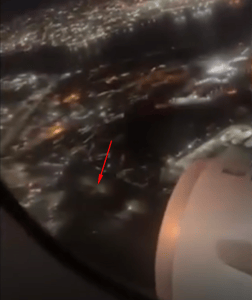
In this instance, the timing couldn’t have been worse: take-off, right after leaving New York’s airport zones – where birds stray into flight paths – and bam. Full bird-ingestion moment. According to aviation-hazard trackers, these incidents peak at low altitudes during ascent or descent.
The airline issued a statement: Flight 1722, with 190 passengers and six crew members, diverted to JFK after a bird strike. They thanked their crew for their professionalism, stated that the aircraft would undergo maintenance, and apologized for the inconvenience.
Meanwhile, footage of the impact is going viral. A phone-cam shot from inside the cabin shows the engine fan lit up, the plane wobbling, and the bird being obliterated mid-ingestion. It’s wild.
From the passenger log:
- 190 souls boarded for Charlotte.
- Just minutes into the flight, the bird strike happened.
- The plane landed safely at JFK under single-engine power.
- No injuries. Hotel accommodations provided.
To put it in perspective, this echoes the iconic Miracle on the Hudson of 2009, where a bird strike disabled both engines, and the jet ditched into the Hudson River. This time, the pilot stayed airborne and diverted to JFK. Less Hollywood splash, more controlled slide.
The incident raises bigger questions: how do airports mitigate wildlife risks? What’s the threshold for an engine to handle bird ingestion? According to aircraft‐engine design rules, they’re tested to survive ingestion of a 4-lb bird without fatal failure – but that’s the test-bed, not always reality.
For the passengers? Fright night turned relief. One passenger described seeing the bird hit, hearing the bang, and thinking, “This is it.” Yet they landed safely. The airline shuffled them into a hotel, rebooked flights for the next morning. At the end of the ride – shaken, but alive.
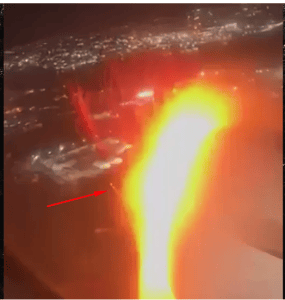
And yes: bird strikes on jet engines might sound like niche aviation-nerd stuff – but they impact real lives, real flights. This one gives a live lecture on “expect the unexpected” on high-stakes air travel. The clip will haunt screen-loops for weeks.
Bottom line: one bird. One turbine. One emergency divert. No injuries. But a story that’ll echo through aviation circles – and savage joke-riddled Reddit threads. Sharks might get the headlines. But today’s villain was a winged assassin with feathers.
Next time you’re ascending out of LaGuardia, take a breath, maybe check under your seat, but mostly brace for the improbable. The skies are wild. The engines spin fast. And sometimes, the bird wins.